

Beautiful beach waves don’t need a curling iron, flat iron or hot rollers. At REGROW, we believe the best styles start with healthy hair, and heat-free styling is one of the kindest things you can do for your strands. With damp hair, a few simple techniques and a sulphate-free routine behind you, you can achieve heatless beach waves that look effortless and last all day.
Why Choose Heatless Beach Waves?
Regular heat styling can leave hair dry, brittle and prone to breakage, especially if you skip a heat protectant spray. Heat-free methods help you get beach waves without damaging hair, which matters even more if you have fine hair or hair that’s feeling thinner than it used to. Constant heat is one of the hair care habits that can damage your hair, so giving your heat styling tools a break protects your hair health over time.
Start With Freshly Washed, Healthy Hair
Every great style begins in the shower. Our REGROW Women’s Shampoo and Conditioner are free from sulphates, parabens and silicones, so they cleanse without stripping your hair or weighing it down. That means lighter, more voluminous hair that holds a wave beautifully. Silicones coat the strand and make waves fall flat, so we leave them out.
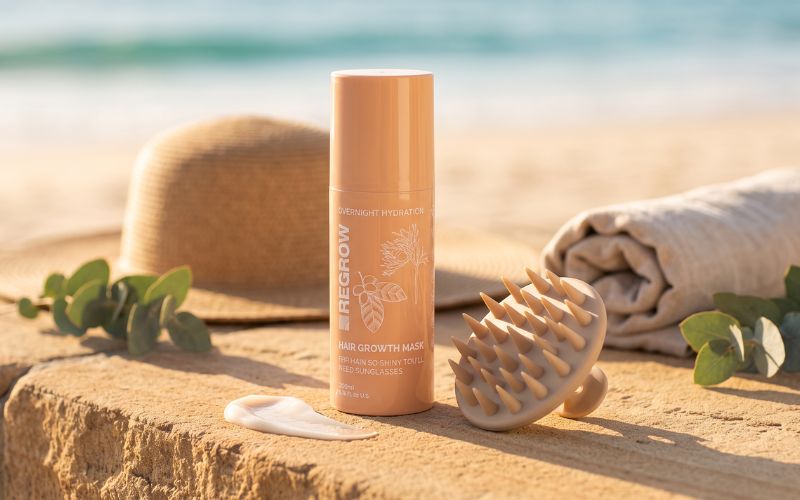
Once a week, swap in the REGROW Hair Growth Mask. With argan oil, shea butter, kakadu plum and vitamin E, it deeply hydrates dry hair, helps reduce breakage and improves softness and manageability. Hydrated hair forms smoother, more defined waves with less frizz.
Get the Moisture Level Right
Damp hair is essential for heat-free styling. Soaking wet hair takes too long to dry and can leave waves limp, while completely dry hair won’t set at all.
After washing, gently squeeze out excess water with a microfiber towel. Rough towel drying roughs up the cuticle and causes frizz. Let your hair air dry until it’s about 80% to 90% dry, so it’s slightly damp but not dripping. This small step makes all the difference.
5 Ways to Create Waves Without Heat
1. Overnight Braids
Braiding damp hair overnight yields defined beach waves. Split your hair into a few sections and plait each one, securing the ends with a silk scrunchie or soft hair tie. Loose braids give looser waves, while tighter braids create tighter waves. A french braid starts the wave closer to the roots for extra lift.
2. Twists and Buns
Twisting damp hair is one of the easiest ways to create beachy waves without heat. Twist each section away from your face, then coil it into a bun and pin it in place. Twisting hair into buns while damp creates tighter waves, while a single loose twist gives a relaxed finish.
3. Heatless Rollers and Flexi-Rods
Heatless rollers create smooth, uniform beach waves, especially on long hair. Flexi-rods create soft, voluminous waves in damp hair and suit thick hair that holds a curl well. Roll from the mid lengths to the ends and leave them in for a few hours or overnight.
4. Pin Curls
Pin curls can create beach waves with minimal effort and work beautifully on fine hair. Wrap small sections of slightly damp hair around two fingers, lay each curl on a flat surface against your scalp and secure it with bobby pins. This classic curling technique adds body without flattening fine strands.
5. Headband Wraps and Bantu Knots
Wrapping damp hair around a satin headband overnight creates soft, heatless waves as it dries. For textured hair, Bantu knots give bouncy, defined waves. Sleeping on a silk scarf or pillowcase helps prevent frizz while you rest.
Finishing Your Perfect Beach Waves
Once your hair is completely dry, release the style carefully. Use your fingers or a wide tooth comb to gently separate the waves, and avoid fine-toothed combs, which break up the pattern and cause frizz. Finger comb at the roots and gently tousle the whole head for a lived-in finish.
To boost texture, lightly mist a sea salt spray or texturising spray through the lengths. Choose a lightweight formula that adds grip without stiffness, and keep hair spray to a minimum so your waves keep their natural movement. A drop of nourishing oil on the ends helps tame flyaways and adds softness.
Tips for Every Hair Type
- Pin straight hair: Hold the style longer and use tighter braids or pin curls for more grip.
- Naturally wavy hair: Scrunch in a little product and air dry to enhance your natural waves.
- Fine hair: Use smaller sections and lightweight, silicone-free products to avoid weighing hair down.
- Thick hair: Allow extra drying time and work in a few more sections.
Whatever your hair type, healthy hair holds a wave better than damaged hair.
Frequently Asked Questions
How do I get beach waves without heat?
The most reliable no-heat methods work by setting your hair while it dries. Try damp overnight braids or a loose twist, foam or fabric rollers, or a rope braid wound into a bun. The key is to style hair when it is damp, not soaking, and to let it dry fully before taking it out so the wave holds.
How long do heatless waves last?
For most people they hold for a day, sometimes two, depending on your hair type and the weather. Finer hair tends to drop faster, while thicker or longer hair holds a wave for longer. A light mist of water and a quick re-scrunch the next morning can revive them without starting over.
Are heatless styling methods better for thinning hair?
Skipping hot tools removes one common source of breakage, which matters when hair is already fragile. Heat weakens the hair shaft over time, so letting it dry naturally helps you hold on to the length and condition you have. Just avoid tight styles that tug at the roots, as tension can add its own stress.
Why does my hair not hold a wave overnight?
The usual culprits are styling hair that is too wet or too dry, or taking the braids or rollers out before the hair has fully dried. Hair needs to be damp when you set it and completely dry when you release it. Very smooth or freshly washed hair can also resist a wave, so a little texture helps it grip.
Does washing my hair the night before help heatless waves?
It can, as long as your hair is damp rather than dripping when you set the style. Clean hair with a little natural texture takes a wave more easily than slippery, product-heavy strands. Washing with a gentle, sulphate-free formula keeps the scalp balanced without stripping the oils that help your waves look soft rather than frizzy.
Healthy Hair, Effortless Waves
Heatless waves hold best on hair that’s clean, hydrated and free from heavy build-up, so your routine matters as much as your technique. Our women’s hair care range is Australian-made and free from sulphates, parabens and silicones, giving you light, nourished hair that takes a wave beautifully.
Not sure which products suit your hair type? Get in touch with our team and we’ll help you build a routine for soft, natural waves.
