

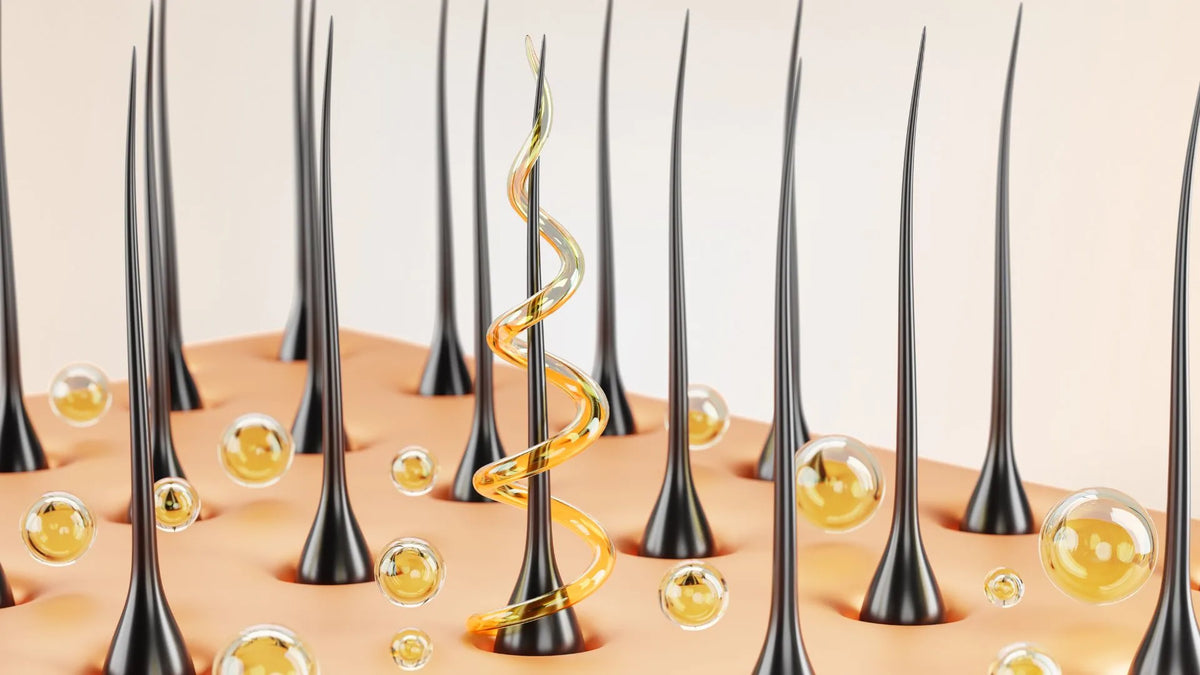
Hair loss is one of the most common concerns for both men and women. While stress, diet, and age can play a part, the hormone dihydrotestosterone (DHT) is often the main driver behind hormone hair loss. Understanding what DHT does and why it affects scalp hair differently from other body hair can help you take early action and protect your follicles.
What Is DHT?
DHT is a potent hormone made when testosterone is converted by an enzyme called 5-alpha reductase. It plays an important role in male sexual development and contributes to secondary traits like facial hair, body hair growth, and muscle development.
The tricky part is that DHT doesn’t act the same way across your body. While it promotes beard and pubic hair growth, it can weaken scalp follicles and cause hair thinning if you are genetically predisposed.
How DHT Triggers Hair Loss
When DHT binds to androgen receptors in scalp follicles, it gradually shrinks them. This process, called miniaturisation, leads to finer, weaker hair. Over time, follicles can stop producing hair altogether.
This is the main cause of androgenetic alopecia, better known as male pattern baldness or female pattern hair loss. Family history plays a big role, as genetics determine how sensitive your scalp follicles are to DHT.
DHT and Women’s Hair Loss
It’s not just men who produce DHT. Women naturally have lower levels, but the balance can shift. When oestrogen levels drop, such as during menopause, post-pregnancy, or due to certain health conditions, the relative influence of DHT increases. This hormonal shift can cause scalp follicles to weaken and shrink, leading to noticeable hair thinning, often around the crown or temples.
The Scalp Connection
DHT can also build up in the sebaceous (oil) glands near the follicles. This extra DHT makes the scalp environment less supportive of healthy growth and speeds up follicle miniaturisation. Once follicles die completely, they cannot regrow hair, which is why early action matters.
Can You Block DHT?
Yes. Treatments that block DHT production, known as DHT blockers, can slow down or even reverse hair thinning while follicles are still active. These work by reducing the conversion of testosterone to DHT, protecting scalp follicles and keeping them in the growth phase longer.
Lifestyle choices help too. Managing stress, supporting healthy hormone balance, and looking after scalp health all contribute to stronger hair. For advanced cases, hair transplant surgeons may suggest surgical restoration, but early treatment is almost always simpler and more effective.
Natural DHT Blockers That May Help
If you would rather start with a natural approach, several plant-based ingredients are commonly used in hair care for their role in supporting a healthier scalp environment:
- Saw palmetto, the most widely studied natural ingredient linked to reducing DHT activity, and a key active in our formulas.
- Pumpkin seed oil, a source of zinc and compounds often included in hair-friendly routines.
- Caffeine, applied topically to help stimulate the scalp and support the growth phase.
- Green tea extract, rich in antioxidant catechins.
- Rosemary oil, traditionally used to support scalp circulation.
- Stinging nettle, often paired with saw palmetto in natural formulas.
These ingredients work best as part of a consistent daily routine rather than as one-off fixes. Our saw palmetto based hair care range brings several of these actives together for both men and women, so your scalp gets steady support from the very first wash.
Restoring Hair with Regrow
If you're seeing signs of thinning hair, a widening part line, or a receding hairline, it's not too late to act. Our hair growth starter packs are designed to help you begin blocking DHT and supporting your scalp from the very first wash. It's your sign to start using REGROW.
Your hair restoration journey is unique, but with the right approach, you can protect your follicles, encourage growth, and feel confident again.
FAQs
What is DHT and why does it affect hair loss?
DHT is a hormone created when testosterone is converted by the enzyme 5-alpha reductase. While it supports body and facial hair growth, it can negatively affect scalp hair by shrinking hair follicles in people who are genetically sensitive to it.
How does DHT cause thinning hair?
DHT binds to receptors in scalp hair follicles and causes them to gradually shrink. This process produces finer, weaker hairs over time and can eventually stop hair growth in affected areas.
Is DHT hair loss genetic?
Yes, genetics play a key role. Whether DHT causes hair loss depends on how sensitive your scalp follicles are to it. This sensitivity is inherited and explains why hair loss patterns often run in families.
How does DHT build up in the scalp?
DHT can accumulate in the sebaceous glands located near hair follicles. This buildup creates a less supportive environment for healthy hair growth and accelerates the miniaturisation process. Keeping the scalp clean and healthy can help reduce the impact of this buildup alongside other targeted treatments.
What are DHT blockers and how do they work?
DHT blockers are treatments that reduce the conversion of testosterone into DHT by inhibiting the enzyme 5-alpha reductase. By lowering DHT levels at the scalp, they help protect follicles from shrinking and keep them in the active growth phase for longer. They are most effective when used in the early stages of hair thinning while follicles are still functioning.
